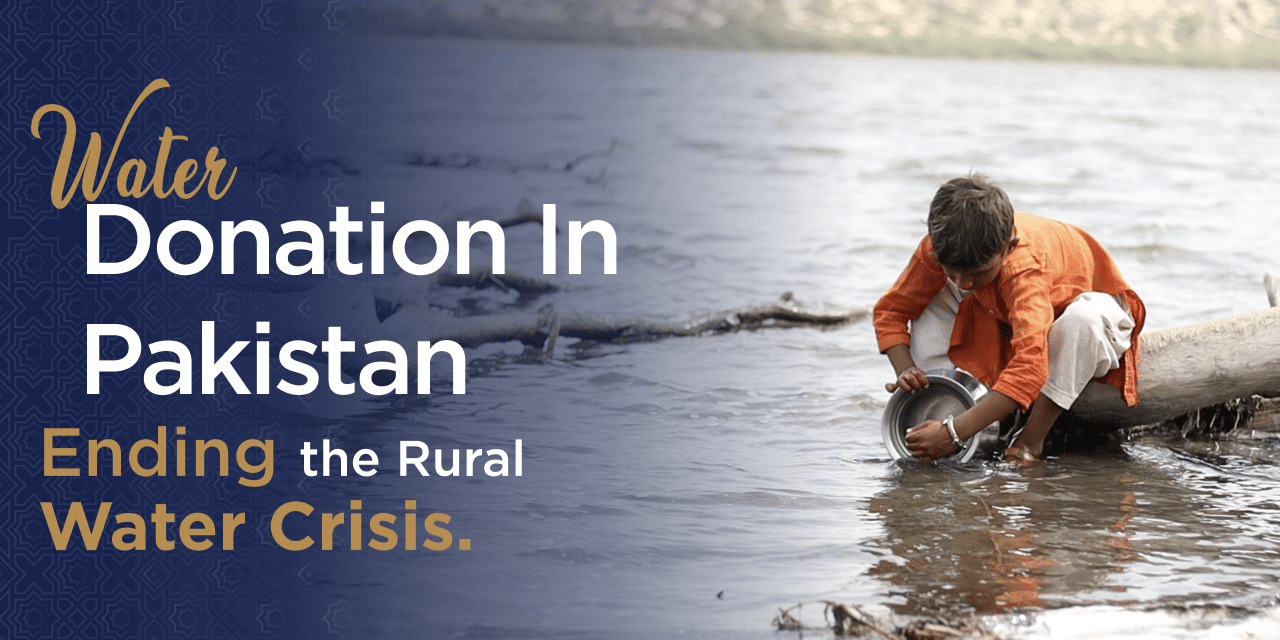
The water crisis in rural Pakistan represents a persistent failure of water resource management rather than a singular supply deficiency. It is a structural challenge that claims the lives of tens of thousands annually through preventable waterborne diseases and traps millions in a cycle of poverty. For residents in the Indus Basin and rural Punjab or Sindh, the crisis is not a series of academic data points; it is a daily survival burden. The burden of hauling contaminated water from distant catchment ponds consumes time that could otherwise be utilized for education or economic activities. Across Pakistan, more than twenty million people still lack reliable access to safe drinking water Pakistan, increasing dependence on Water Donation in Pakistan and broader rural water programs supported by clean water initiatives and NGO-led water systems working across rural districts.
While public discourse often isolates climate change as the primary driver, the reality is more nuanced. The crisis is a product of inadequate infrastructure design, limited governance, and the absence of long-term maintenance protocols. Organizations like the Quba Foundation are addressing these challenges through comprehensive initiatives that prioritize sustainable access, including water conservation organizations Pakistan focused on long-term resource stability and community-led water systems.
Why Water Donation in Pakistan Is Critical for Rural Communities in Pakistan
The crisis is governed by a destructive, self-reinforcing mechanism. When a community relies on untreated, open-source water, contamination often leads to chronic infection. This illness imposes a heavy medical tax on the family, which includes the cost of medicine, transportation to distant clinics, and lost labor hours. That tax drains the household surplus. Without that capital, the community frequently struggles to fund the small maintenance fees required to keep local water infrastructure functional. As pumps fail, the population is forced back to historical catchment ponds, which reinitiates the cycle of illness. Empirical estimates, such as the widely cited 70 percent reliance on contaminated sources in some rural districts, vary based on seasonal cycles. Under current conditions, these figures serve as a warning sign of the systemic instability facing rural communities, guaranteeing the return of the health crisis whenever maintenance lapses.
How Hand Pump Donation Pakistan Creates Sustainable Clean Water Solutions in Pakistan
To break this trap, policymakers and aid organizations must choose where to deploy limited resources based on the specific geological and social reality of the village. In regions with high salinity or toxicity, the priority is rapid health stabilization. In these high salinity zones, intervention selection is non-negotiable. Only deep aquifer systems combined with point-of-use filtration remain viable. This is where many clean drinking water organizations Pakistan focus their interventions because groundwater quality directly determines long-term viability.
Effective water scarcity solutions Pakistan require a tiered intervention model that aligns technology, geography, and governance capacity rather than applying uniform infrastructure approaches. In many rural settings, this includes mechanical systems supported by rural water programs that prioritize durability and repairability over short-term installation targets.
In other areas, the goal is structural stability. This tier favors robust mechanical infrastructure, such as the hand pump initiatives supported through Hand Pump Donation Pakistan and Water Pump Donation Pakistan programs, over high-tech electronic systems. The logic prioritizes repairability so that if a pump breaks, the community can source spare parts in a local market.
In regions experiencing rapid water table depletion, the goal shifts to long-term survival requiring deeper climate-adjusted boreholes. This is the highest tier of commitment and requires a baseline of governance capacity where the community manages a reserve fund to protect access to deeper, shrinking water pools. In such contexts, Water Conservation Organizations Pakistan, including field efforts supported by Quba Foundation, play a key role in aligning infrastructure with long-term hydrological constraints.
How Water Scarcity Solutions Pakistan Vary Across Regions
The landscape of rural water is a complex mosaic where geographic and geological factors dictate the success of infrastructure. In the arid south, salinity acts as a permanent barrier, while in the north, pesticide runoff from riverine farming often infiltrates shallow water tables. Consider two neighboring districts: one might have a stable water table that supports a standard pump, while the other sits over a receding aquifer that necessitates a higher level of investment. Climate change acts as a systemic stress multiplier across these zones.
Rising temperatures drive higher crop water demand, which triggers excessive groundwater extraction and leads to a faster decline in water tables. If interventions are not calibrated for the depletion rate of the coming decade, they represent a sunk cost that will collapse as the water table retreats. Practitioners increasingly recognize that we must use mapping to predict aquifer health, ensuring our technical choices are made with the reality of a changing climate as the primary input.
Why Many Water Projects in Pakistan Fail
Not every project succeeds, and the aid sector should acknowledge that a significant portion of rural water projects face early failure. When a pump is installed without a community-managed maintenance fund, it often becomes a liability rather than an asset. The system comprises four primary actors with diverging incentives: state institutions often prioritize urban centers; non-governmental organizations are frequently driven by donor incentives that prioritize high volume installation counts; the private sector operates based on market demand; and the household unit bears the ultimate cost.
To move toward genuine resilience, the industry would benefit from replacing volume-based performance indicators with metrics of longevity. Success should be redefined not by how many wells are drilled, but by the uptime percentage, which is the amount of time the system actually provides water, recorded over a five-year duration.
Benchmarking Water Donation in Pakistan Models: From Government to Utility Systems
To properly evaluate water donation in Pakistan initiatives, we must compare existing rural water delivery models. The traditional government model is centralized and rigid, often suffering from bureaucratic delays that render repairs impossible within a meaningful timeframe. The traditional NGO model is fragmented and volume-driven, failing to address the long-term maintenance needs of the infrastructure it installs. Many rural water programs operate within this constraint, where impact is often measured in installation numbers rather than long-term functionality, a pattern commonly seen across Water Non Profit Pakistan initiatives.
A proposed hybrid utility model sits between these extremes, utilizing the reach of water-focused NGOs while adopting the operational rigor of a utility provider. This shift is increasingly supported by NGO-led initiatives moving toward sustainability-based frameworks rather than short-term project delivery. In this context, Quba Foundation represents a practical example of an organization working toward structured, community-centered water access models in rural Pakistan.
Water charity Pakistan initiatives often fund the initial deployment phase, but long-term success depends on integrating water conservation organizations Pakistan principles, such as maintenance funding, community ownership, and environmental adaptability.
By benchmarking this hybrid approach against the status quo, we see a clear improvement in functional longevity. While the government model might achieve 40 percent uptime and the NGO model often performs below 60 percent in field conditions, a well-governed utility model can consistently exceed 90 percent. This represents a fundamental shift in the economics of water access, where the cost per functional year is drastically reduced by prioritizing maintenance over new installation.
In this framework, Sadqa e Jariya water Pakistan initiatives become particularly relevant, as they emphasize sustained benefit over time rather than one-time infrastructure delivery.
We must acknowledge that donor optimization behavior is a major systemic driver of failure. Institutional donors often require visible, easily photographed units installed as their primary metric, which creates a perverse incentive for agencies to prioritize quantity over quality. This is exacerbated by short-term funding disbursement logic and rigid annual reporting cycles that fail to account for lifecycle costs. To address this, funding must be reoriented toward initiatives, including Sadaqah Jariyah water well projects that prioritize the functional longevity of an asset rather than its initial creation. Providing rural communities with the tools for autonomy, such as empowering female leaders to oversee maintenance funds, is the most effective way to promote stability. When villagers see that their contribution is being used effectively for repairs, they are significantly more likely to continue contributing, which is the cornerstone of resilience.
How Donate a Hand Pump in Pakistan Programs Build Lasting Change
The water crisis in rural Pakistan is defined by a system where health, economic output, and infrastructure maintenance are locked in a codependent, downward-trending loop. A successful fix requires a transition from reactive relief to proactive, tiered infrastructure deployment. By embedding maintenance, governance, and technical precision into the intervention logic, we replace a fragmented landscape of charity with a more unified map of resilience. Through the dedicated efforts of donors choosing to donate water pumps in Pakistan, we are building the infrastructure of a resilient future. Future developmental efficacy will be determined by our willingness to replace volume-based narratives with the hard evidence of operational longevity. Water infrastructure in rural Pakistan fails not at the point of installation, but at the point of maintenance liquidity.
Building Sustainable Water Charity Pakistan Systems
To achieve the 90 percent uptime threshold required for sustainable rural water security, implementing organizations must adopt a rigorous maintenance and governance framework. Water Non Profit Pakistan organizations are increasingly shifting toward maintenance-driven models rather than short-term deployment.
Geological Site Assessment requires pre-drilling surveys to determine total dissolved solids levels and static water table depth. Installations should not proceed where salinity exceeds threshold limits without advanced reverse osmosis integration.
Maintenance Fund Ring Fencing requires communities to establish a local maintenance committee with transparent, audited financial records. Contributions must be collected monthly regardless of pump status to build a capital reserve for inevitable mechanical wear.
Spare Parts Supply Chain systems must link local repair technicians to regional supplier networks, ensuring that seals, pipes, and handles are available within a 48-hour procurement window. This approach is widely supported by clean water initiatives working across rural districts.
Infrastructure Standardization discourages proprietary high-tech hardware. Standardized heavy duty hand pumps allow for local repairability and minimize dependency on external agency assistance. This model is also increasingly adopted by NGO led water systems focused on long-term sustainability.
Governance and Oversight require that women, as primary water managers, occupy a minimum of 50 percent of seats on water committees to ensure that site selection and usage rules reflect actual daily household needs. Organizations such as Quba Foundation apply similar community-centered governance principles in their field programs to improve long-term functionality and accountability.
Why Water Pump Donation Pakistan Needs Long-Term Funding
The current model of wells drilled per year creates a perverse incentive structure. Agencies are rewarded for rapid, low-cost installations, which are often of poor quality and prone to rapid failure. Shifting to an uptime-based payment model where a portion of project funding is contingent upon the well remaining functional over five years aligns the incentives of the donor, the implementer, and the community. This shift forces a change in design, materials, and long-term planning. When the goal is sustained functionality, the upfront cost of the pump becomes secondary to the lifecycle cost of the service. This is the only way to transform the water sector from a series of disparate, failing projects into a cohesive, functional public utility.
Future Water Conservation Solutions in Pakistan: Building Sustainable Rural Water Systems
To finalize this systemic transformation, the following actions are recommended:
- Transition to Performance Indicators: Reporting must move from total units installed to average annual uptime percentage.
- Standardize Financial Protocols: Every new pump must have an associated, legally recognized village maintenance committee and a designated reserve fund.
- Promote Gender Equity in Governance: Institutionalize female participation in all water governance nodes.
- Adopt Multiyear Monitoring: Commit to at least five years of post-installation monitoring to capture the full lifecycle of the infrastructure.
- Leverage Local Technical Expertise: Train and certify local technicians to create a sustainable, community-based service economy around water infrastructure.
Conclusion:
The ultimate success of water initiatives in Pakistan depends on a fundamental shift in how we define impact. We must move beyond the visibility of the initial installation and commit to the long-term operational health of the infrastructure. True resilience is not found in the number of wells drilled, but in the sustained ability of a community to manage its own resources. By aligning donor incentives with system uptime and prioritizing maintenance liquidity over volume-based growth, we can bridge the gap between temporary relief and permanent utility. For the millions living under the threat of scarcity, the transition to an internalized, community-led management model is the only pathway to securing water as a reliable inheritance for the next generation. This shift ensures that every investment serves as a cornerstone of lasting stability, transforming the landscape of rural water access from a cycle of decline into a foundation for collective prosperity.
Frequently Asked Questions
FAQ's
Water Donation in Pakistan refers to charitable initiatives that fund clean drinking water projects such as hand pumps, water wells, and filtration systems in rural communities that lack safe access to water.
Many rural areas in Pakistan depend on unsafe or contaminated water sources. Lack of clean water leads to waterborne diseases, economic loss, and long-term poverty cycles, making safe water access a critical development need.
Hand pump donation programs provide locally repairable water access solutions in villages. These systems are cost-effective, durable, and allow communities to access groundwater without relying on distant or unsafe water sources.
Quba Foundation focuses on long-term sustainability by combining infrastructure development with maintenance planning, community ownership, and water conservation strategies to ensure lasting impact.
Yes, when properly designed. Sustainable projects include maintenance funds, community training, and appropriate technology selection based on local water conditions and long-term aquifer stability.
You can support by donating toward hand pumps, clean water wells, or rural water programs through trusted organizations like Quba Foundation that focus on sustainable and long-term water solutions.