In the quiet, dust-filled villages of South Punjab and the sprawling, unforgiving deserts of Sindh, life is not measured by hours or minutes. It is measured by the weight of a water pot. While those of us living in big cities like Lahore, Karachi, or Islamabad can simply turn a tap to wash our hands or make a cup of chai (Tea), millions of our fellow Pakistanis wake up every single day to a much harsher reality. For them, water is something that must be collected, carried, and rationed carefully every day. It is a daily struggle that must be fought for under a sun that often crosses 47 degrees Celsius. At Quba Foundation, we have seen this struggle up close. We have met the mothers who walk four kilometers before the sun is even fully up, and the children who cannot go to school because their only job is to be the water carriers for their families. This is why our Suqya Water Project is so close to our hearts. When we talk about the hand pump cost in Pakistan, we are not just talking about the price of iron and hardware. We are talking about the price of a child’s future and a mother’s dignity.
Why Hand Pumps Are Important in Pakistan
The water crisis in Pakistan is far more serious than most people realize. In many rural districts, safe drinking water simply does not exist. Families rely on communal ponds, known as Tobas, or nearby irrigation canals. These sources are often shared with animals, which quickly leads to contamination. For the people living in these villages, this is not a temporary problem. It is their daily reality. The heartbreaking part is that these ponds are shared with livestock. Cattle often bathe and drink from the same stagnant water that a mother uses to fill her bucket for her children. This water is filled with bacteria and parasites, but for these families, it is the only choice they have.
The lack of hand pumps for clean drinking water in Pakistan is the biggest reason why so many children fall ill in rural areas. Diseases like cholera and typhoid are widespread due to people drinking contaminated water. For a poor laborer earning a daily wage, a single case of typhoid in the family can be financially devastating. The money they should be spending on food goes to doctors and medicine. Hand pump Installation in Pakistan effectively provides a family with protection against disease. It is one of the most basic yet impactful forms of healthcare you can provide.
The Geography of Water Access
Pakistan is a land of extremes. From the high mountains in the north to the flat plains in the south, the way water moves underground changes every few miles. In the fertile heartland of Punjab, the Indus River system keeps the water table relatively accessible. Here, you might find clean water projects in Pakistan just 40 to 60 feet down. These are the areas where a Medium Power Hand Pump works perfectly. But as you move toward the Thar Desert in Sindh or the dry, rocky belts of Balochistan, the ground changes. The sand and rock act as a barrier, and the water table drops significantly. In these places, we often have to drill 150 to 200 feet deep. This is where the Heavy Duty Hand Pump becomes necessary. These pumps are built with thicker metal and stronger internal mechanisms to pull water from those great depths without snapping the handle or wearing out the washers.
Hand Pump Cost in Pakistan
We often get calls at Quba Foundation from donors asking why the cost of a hand pump varies so much from one place to another. It is a fair question. The truth is that the cost of installing a hand pump in Pakistan depends heavily on the geography of the land. Our Medium Power Hand Pump starts at 45,000 PKR. This price covers everything from the initial site survey to the final brickwork. For areas with a deeper water table, our Heavy Duty Hand Pump costs 95,000 PKR. This price reflects the extra piping, the more powerful pump head, and the specialized drilling rigs needed to cut through difficult soil layers.
At Quba Foundation, we have a very strict rule about the materials we use. You can find cheap pumps in the local markets that might save a donor some money today, but those pumps will rust or break within six months. That is not charity; that is a waste of your hard-earned money. We use heavy-duty cast iron pump heads and high-grade PVC or galvanized pipes that are designed to last for decades. We also build a proper concrete platform around the pump. This platform is very important because it prevents dirty water from pooling at the base and leaking back down into the well. If that happens, the clean water underground gets contaminated. Our installation includes everything from the initial survey to the final concrete finish.
How Hand Pump Donations Change Lives
When a hand pump begins operating in a village, daily life improves visibly. Children who previously relied on pond water experience fewer stomach and skin infections, while families gain time and peace of mind. The benefits reach beyond health, affecting education, work, and household life in meaningful ways. We talk a lot about time poverty. In a village without a pump, a woman might spend five hours a day just fetching water. Think about that. That is five hours every single day where she cannot rest or care for her children. When we install a hand pump for a village in Pakistan, we are giving those five hours back to that woman. She can finally look after her home or start a small business, like embroidery, to help her family.
The same goes for the children. Many kids in rural Pakistan do not go to school because they are busy helping their parents carry water pots. A hand pump in the village means those kids can finally put down the bucket and pick up a book. It is a direct investment in the education of the next generation. We also see a big difference in the economic health of these families. Most people in these villages survive on their livestock. Their goats and cows are their only savings. Animals need a lot of water to stay healthy and produce milk. A hand pump ensures that the family’s livestock is well taken care of, which means the family has more milk to drink and more to sell.
Support Hand Pump Projects in Pakistan
At Quba Foundation, our Suqya Water Project is dedicated to bringing clean water to the most underserved villages across Pakistan. We do more than just install hand pumps; we create sustainable solutions that empower communities. Before any drilling begins, our team identifies families who need water the most, such as widows, households with disabled members, or those living far from existing water sources.
Once a pump is installed, we work closely with the villagers to form a local water committee. This committee is trained to handle basic maintenance, ensure the area around the pump stays clean, and monitor the water supply. By giving communities the knowledge and tools to maintain their own water sources, we foster a sense of ownership and responsibility.
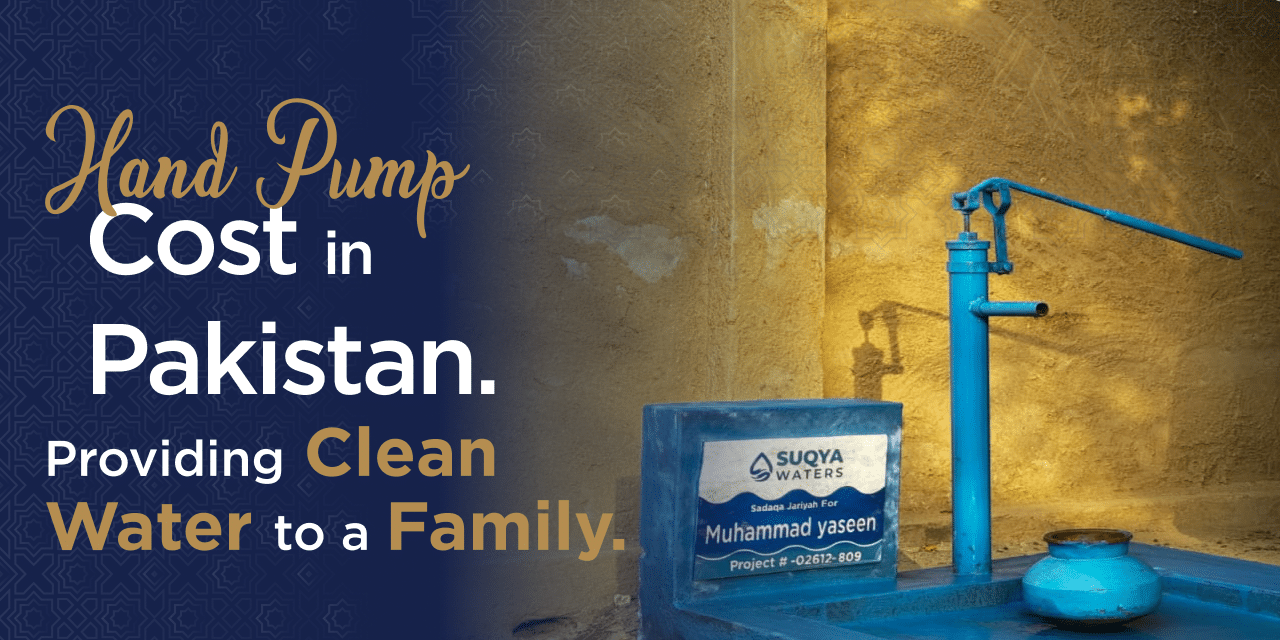
Donors receive full transparency on their contributions. We provide GPS coordinates, photos, and videos showing the pump in action, so you can see exactly how your donation is making a difference. Each pump also carries a plaque with the donor’s name or the name of a loved one, creating a personal connection between the giver and the village.
Supporting this project is more than providing access to water. It empowers communities to manage and sustain their water supply for generations. Every hand pump installed through the Suqya Water Project transforms lives, improves health, and opens the door to education and opportunity for children who would otherwise spend hours fetching water every day.
The Spiritual Side of Water Charity
For many of us, the motivation to cover the hand pump cost in Pakistan is rooted in our faith. In our tradition, providing water is considered the best form of Sadaqah Jariyah. It is a charity that keeps on giving. As long as that pump is working, and as long as people, animals, or birds are drinking from it, the reward continues to reach the donor. It is a beautiful way to honor the memory of a parent or a loved one who has passed away. You are giving the gift of life, and that is a legacy that never dies. Clean water also allows our community members to perform their religious obligations, like wudu, with dignity and ease.
The technical process we follow is designed to respect your donation. We test the water to make sure it is not just wet, but truly drinkable. If we find that the water in a specific area is saline or has high levels of arsenic, we do not just walk away. We look for a deeper aquifer or recommend a filtration plant. This technical honesty is what has built the trust between Quba Foundation and our global donor family. We are not just building pumps; we are building a more resilient Pakistan.
The Impact on Women and Girls
We must speak specifically about the women and girls in these villages. In our rural culture, the responsibility for water almost always falls on them. When a village is three kilometers away from a water source, a young girl might walk twelve kilometers a day just to keep her family hydrated. This physical toll is immense. It causes spinal issues and chronic pain. By placing a hand pump right in the center of a small cluster of homes, we are protecting the physical health and safety of these women. They no longer have to wander into isolated areas alone, which significantly reduces their vulnerability.
Conclusion
The water crisis in Pakistan is huge, but it can be solved one village and one hand pump at a time. With a small contribution, you can transform a family’s future. You can be the reason a girl goes to school and the reason a mother no longer walks miles under the scorching sun. At Quba Foundation, we go where the need is greatest, no matter how difficult the terrain. Join us in this mission. Every rupee counts. Donate a hand pump today and give the gift of clean water, health, education, and hope. Make a lasting impact. This is the best investment you will ever make. Support clean water projects through the Suqya Water Project and change lives today. Be the reason a child drinks safe water, goes to school, and a family thrives tomorrow.
Frequently Asked Questions
FAQ's
The cost is 45,000 PKR for a medium power pump and 95,000 PKR for a heavy duty deep bore pump.
With the high-grade materials we use, our pumps typically stay functional for 15 to 20 years.
Yes, it is considered one of the most powerful forms of continuous charity in our faith.
A medium pump usually serves 15 to 20 families, while a heavy duty pump can support up to 25 to 30 families.
We train local caretakers to handle basic maintenance like replacing leather washers or lubricating parts.
Yes, we conduct site surveys and tests to ensure the water is sweet and free from surface contaminants.
Absolutely, healthy animals lead to better nutrition and more income for the rural poor.
We provide every donor with a full completion report, including photos, videos, and GPS coordinates.