Money is a big part of our daily lives, and in Islam, how we earn and spend it matters a lot. Giving a portion of your wealth to help others has always been an important part of building a caring Muslim community. When people actually share what they have, you see neighborhoods transform. Families get out of debt, small businesses survive tough times, and the people giving the money feel a sense of peace that you really cannot buy.
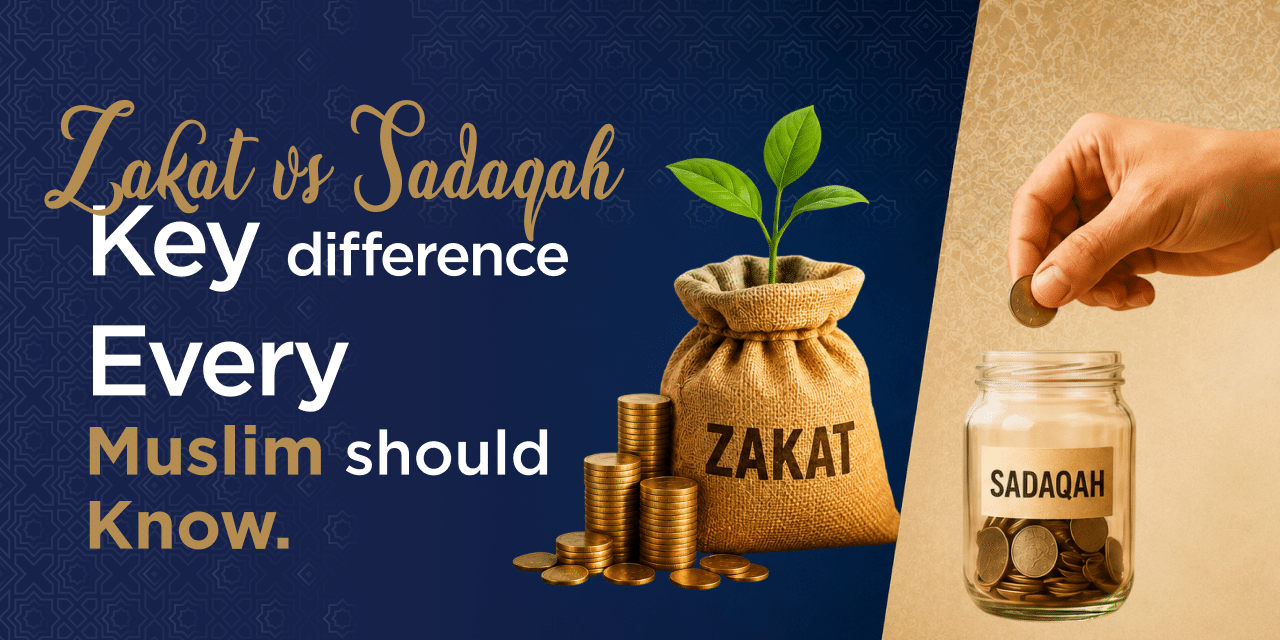
Whenever Islamic charity is discussed, two specific terms often come up. People constantly ask about zakat vs sadaqah and how to handle both of them correctly. While both of these actions involve giving things away for the sake of Allah, they are completely separate concepts. They follow different rules, are given in different situations, and serve different purposes in Islam. Understanding the true difference between zakat and sadaqah is going to help you manage your finances better and make sure your charity reaches the people who actually have a right to it.
Understanding Zakat
Zakat is one of the most important financial responsibilities in Islam. It is one of the Five Pillars of Islam and becomes obligatory for Muslims whose wealth reaches the nisab. That means it is just as foundational to your faith as praying five times a day or fasting during the month of Ramadan. If an adult Muslim’s wealth reaches the required minimum amount known as nisab and the necessary conditions are fulfilled, zakat becomes due according to Islamic law.
An important thing to understand is that zakat is considered the right of eligible recipients. Paying it is not simply a personal favor or a general donation. It is a responsibility that ensures wealth reaches those who are entitled to receive it. The amount is calculated according to Islamic guidelines based on eligible wealth.
Sadaqah Meaning in Islam
Sadaqah takes a different approach. In Islam, the meaning of sadaqah is connected with sincerity and honesty. The word comes from a root associated with truthfulness, showing that charity is not only about giving but also about the intention behind it.
Unlike the strict calculations we just talked about, this form of giving is completely open. There is no minimum bank balance required before you can start giving. You do not have to wait for a year to pass. You can give it every single day, once a month, or totally spontaneously when you see someone struggling on the street. It does not even have to be money. Helping a blind person cross a busy road is charity. Smiling at your brother is charity. Feeding a thirsty animal is charity. It is entirely voluntary and based entirely on how much love and generosity you want to put out into the world.
Zakat and Sadaqah Rules
The rules for zakat and sadaqah are different because one is obligatory while the other is voluntary. With your annual obligatory charity, the math has to be precise. Many Muslims choose to calculate and pay their zakat during Ramadan, although the actual due date depends on when the relevant conditions are met. You count your cash, your business inventory, your investments, and your precious metals. Then you have to make sure that money only goes to eight very specific groups of people mentioned in the Quran. These include the extremely poor, travelers stuck far from home, and people drowning in severe debt. You cannot give this money to your own parents or your children, because providing for them is already your normal job.
The rules for voluntary charity are completely relaxed. You can give a single penny or half your paycheck. You can give it to your struggling brother, a distant cousin, or a complete stranger. This brings up a question a lot of people have. Many wonder is sadaqah obligatory if you have extra money. The answer is no. Unless you make a specific religious vow to Allah promising to feed a certain number of people if a prayer is answered, you are never legally forced to give it. Another way people phrase this is asking is sadaqah compulsory in Islam, and the ruling remains exactly the same. It is a highly recommended and beautiful act, but skipping it does not make you a sinner.
Types of Sadaqah in Islam
Charitable giving in Islam can take different forms. If you are wondering about zakat vs sadaqah vs khairat, the difference is fairly simple. Zakat is a religious obligation for eligible Muslims, while sadaqah refers to voluntary charity and acts of kindness. Khairat is a commonly used term for charitable giving in some communities and may include giving food, money, or other forms of help to people in need.
Sadaqah is not limited to financial donations. You can donate your time by tutoring children, helping a neighbor with a difficult task, or offering support to someone going through a hard time. Even simple acts of kindness can be a form of sadaqah.
One important concept related to voluntary charity is sadaqah jariya. The sadaqah jariya meaning refers to a charitable act whose impact continues over time, allowing people to keep benefiting from it. For example, installing a hand pump can provide a lasting source of benefit to a community. Other examples may include planting a tree, supporting education, or helping create a service that continues to benefit others. The key idea is that the benefit of the charitable act continues over time, and the reward may continue as long as people benefit from it.
Which Is Better: Zakat or Sadaqah?
A common question people ask is which is better, zakat or sadaqah. The answer depends on understanding their roles in Islam. Acts that Allah has made obligatory always take priority in Islam. Paying your required annual dues is a pillar of the religion. You cannot skip your required payments to fund a water well or build a mosque somewhere else.
Taking care of your required religious duties comes first, always. Once you have calculated and paid your exact dues, then you open up the doors to voluntary giving. The best approach is to be incredibly strict and careful with your required yearly calculations, and then be incredibly loose and generous with your daily voluntary giving. This keeps your wealth purified, keeps your heart soft, and ensures that the people around you are taken care of without you neglecting your own religious duties.
Conclusion
Although zakat and sadaqah both encourage generosity, they are not the same. Zakat is a religious obligation for eligible Muslims, while sadaqah is a voluntary act that can be given whenever you are able. Knowing the difference helps you fulfill your obligations correctly and make a meaningful difference in the lives of others. Whether it is paying zakat or offering a simple act of kindness, both forms of giving reflect the importance Islam places on helping others.
Frequently Asked Questions
FAQ's
Yes, you can give voluntary charity to almost anyone who needs support. This includes your parents, your siblings, your extended family members, neighbors, and complete strangers. There are no strict restrictions on who can receive it compared to obligatory charity.
The types vary widely and do not only involve money. They include giving cash to the poor, sharing your food, physically helping someone in need, teaching someone beneficial knowledge, and even offering a genuine smile to someone having a bad day.
No, sadaqah is a voluntary act of charity and is not compulsory for Muslims. You can give it whenever you are able, whether it is money, food, time, or another form of help. However, if someone makes a specific vow to Allah to give charity, then fulfilling that promise becomes required.
Fulfilling your mandatory annual zakat is always better and takes absolute priority because it is a foundational pillar of Islam. Once that obligation is fully met, voluntary giving is the best way to earn extra blessings and continuously purify your wealth.