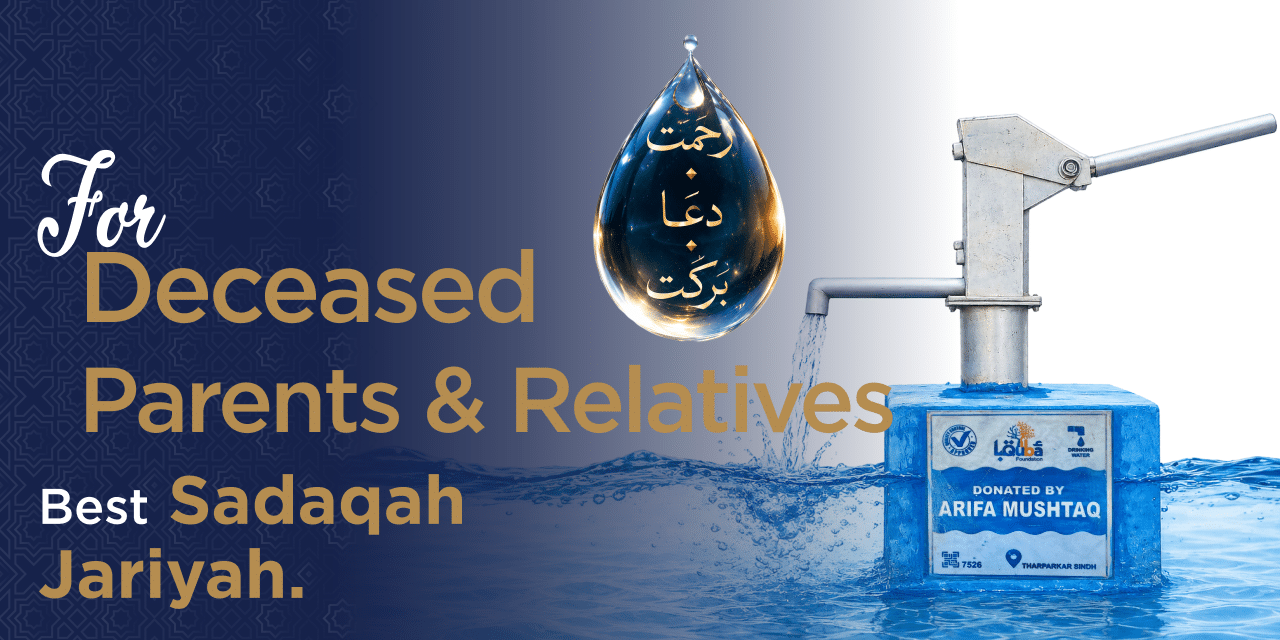
Sadaqah Jariyah is a beautiful form of continuous charity in Islam. It gives us a way to send ongoing blessings to our loved ones even after they pass away. This practice is based on a well-known hadith of the Prophet Muhammad (peace be upon him). He explained that when a person leaves this world, their actions come to an end except for three things: a continuous charity, knowledge that keeps helping people, or a righteous child who prays for them.
When children do good deeds on behalf of their late father or mother, they directly fulfill this beautiful responsibility. Putting your hard-earned money into a lasting project changes the lives of poor communities and brings endless rewards to the deceased. This guide helps you understand how continuous giving works and looks at practical ways to turn your love for your family into life-saving support for others.
Why Sadaqah Jariyah for Deceased Matters
Losing a parent or a close relative leaves a deep, quiet emptiness in the home. Choosing to give a sadaqah jariyah for deceased family members turns your personal grief into a protective shield for others. Instead of short-term aid that disappears in a few days, a permanent project keeps a legacy of kindness alive in places that lack basic necessities, and every time a child helps a community in their parent’s name, that act becomes a living gift that keeps reaching them in the grave.
What is Sadaqah Jariyah
To choose the right path for your family, it helps to understand the foundational definition of this practice. In Islamic teachings, sadaqah jariyah refers to any voluntary charity that creates a self-sustaining, long-term benefit for the public.
The main difference between regular charity and continuous charity comes down to time and permanence. Regular charity fixes an immediate, pressing issue. Examples include feeding a poor family for a day or giving someone cash for medicine. This help is incredibly important, but the action finishes once the food or money is used up. Continuous charity requires building a physical asset that lasts for decades. Instead of a temporary fix, you fund a school, a community plantation, or a reliable water source. When you solve a baseline problem at its root, you ensure the rewards keep circulating for your loved one forever.
Spiritual Motivation and Benefits for the Deceased
Starting a lasting project gives a grieving family a positive, shared goal to focus on. It brings children, siblings, and extended relatives together, helping them channel their collective loss into something that uplifts an entire village.
Seeing your late parents’ name tied to a functional piece of infrastructure offers real emotional and spiritual relief. It serves as a physical reminder that a person’s capacity to do good does not vanish at death. Their physical presence is gone, but their kindness stays active on earth. This beautiful connection builds a bridge of mercy, transforming a painful family loss into a permanent blessing for people who have no other support.
Different Types of Sadaqah in Islam
Giving in the Islamic tradition follows a clear framework based on how long the benefit lasts and how fast people need it. Understanding the different types of sadaqah helps families put their money where it can do the most structural good.
Short-term charity focuses purely on immediate survival. This category includes distributing warm winter blankets, emergency medical kits after a flood, or sharing meat during Eid. These actions save lives during a crisis, but they do not create a permanent legacy because the resource gets used up quickly. A long-term sadqa jaria, by contrast, centers on building a lasting asset. Whether it involves pouring concrete for a school or digging deep into an underground aquifer, the goal is total durability. Prioritizing these permanent setups ensures your capital supports human life independently for generations.
Long-Term Sadaqah Jariyah Projects
When looking for the most effective ways to give back, certain interventions consistently deliver excellent value and stand the test of time.
Clean Water Infrastructure
Supporting a water charity initiative is widely loved as one of the highest forms of continuous giving. In remote, dry regions, a lack of clean water paralyzes daily life. Young children spend their mornings walking hot, dusty tracks to collect muddy water from open ponds. This heavy chore keeps them out of school and exposes families to severe illness. Introducing a protected, clean source changes this reality completely.
For individual donors looking for an affordable project with high daily use, a Water Hand Pump Donation is an excellent choice. These mechanical units tap into deep, naturally filtered underground water. Because they work entirely without electricity, solar panels, or complex computers, they are perfect for faraway rural villages. If a handle or seal wears out over time, local people can fix it quickly and cheaply with basic tools.
This simple setup makes a water donation project highly scalable for families. You can fund a single pump for a small neighborhood or support a network of installations across a dry valley. Quba Foundation manages these water initiatives from initial drilling to safety testing. The team at Quba Foundation provides donors with exact geographic coordinates and completion reports, ensuring full transparency from start to finish.
Educational Infrastructure
Investing in education creates a legacy that naturally multiplies its own impact over time. Funding the construction of classrooms, building a library, or equipping vocational spaces provides young people with the ultimate tools for self-reliance. When a child learns to read, write, or master a trade, that knowledge spreads to siblings and future generations, creating a permanent way out of poverty.
Within this framework, supporting a community school or a local mosque also serves as a powerful continuous charity. It creates a central sanctuary for daily prayer, spiritual growth, and literacy classes. Every moral lesson taught, every prayer offered, and every family lifted up through that infrastructure reflects on the parents who inspired the gift. Quba Foundation actively constructs educational spaces to ensure children in forgotten areas get a fair chance at life.
Maternity and Rural Health Clinics
Medical infrastructure projects offer an essential defensive layer for vulnerable populations, protecting mothers and infants from preventable health crises. In remote districts, minor injuries or sudden infections can quickly become life-threatening simply because the nearest hospital requires an expensive, multi-hour journey.
Building a dedicated clinic room, establishing a diagnostic wing, or supporting local medical staff ensures that poverty no longer dictates survival. Quba Foundation integrates healthcare initiatives into its long-term development programs, creating safe spaces for emergency treatment and maternal care that protect thousands of lives across generational lines.
Orphan Sponsorship and Care Programs
Orphan care programs offer a direct, highly compassionate way to give sadaqa on behalf of a late relative. Rather than providing an isolated grant, structured sponsorship focuses on the complete development of a child, ensuring they receive consistent nutrition, safe shelter, quality healthcare, and long-term schooling.
For those looking for structured choices, the Hifz Orphan Sponsorship program by Quba Foundation provides an excellent balance of worldly education and Quranic preservation. You can view the full program details and sign up directly on the Quba Foundation platform:
https://qubafoundation.org/product/sponsor-an-orphan-for-hifz/
By helping a vulnerable child grow into an independent, educated adult, you build a living legacy that carries rewards forward for decades.
Decision Architecture and Project Selection
Selecting the right project requires moving past abstract ideas and looking closely at your budget, your timeline, and what a specific region actually needs. Every sustainable intervention carries immense spiritual value, but each interacts with a community differently. The goal is to align your family’s giving capacity with a verified need on the ground, ensuring your contribution is shaped around real-world utility.
Strategic Selection Logic
To optimize your impact, consider how different projects resolve local challenges. If your current priority is immediate field deployment or working within a modest financial budget, a mechanical hand pump project provides the fastest route to saving lives, opening up clean water access in a matter of weeks.
If your extended family is planning to pool their capital for a larger memorial gift, investing in educational infrastructure like a classroom or library focuses your impact on multi-generational literacy and economic growth. For families seeking to establish a protective shield against regional health crises, funding a medical clinic room through Quba Foundation offers a permanent sanctuary for the sick and elderly, addressing high-stakes vulnerability over decades.
Comparing Investment Paths
Charitable projects naturally vary in their engineering requirements, upfront costs, and construction timelines. Reviewing these practical differences helps your family learn how to give sadaqah through the right implementation path.
A low-to-moderate cost path is a direct water donation via a mechanical hand pump. This choice addresses the core tier of human survival: daily hydration and sanitation. These units can typically be installed within two to four weeks, instantly cutting down on waterborne illnesses and freeing women and children from hours of daily water transport. A mid-range investment centers on educational projects, such as constructing a schoolroom or a library archive. These developments require three to six months of planning and building a foundation for long-term literacy. Higher-impact infrastructure paths, such as regional medical clinics or specialized maternity wards managed by Quba Foundation, require a larger capital commitment and six to twelve months of construction, but they provide critical health security where medical access is completely missing.
HOW TO GIVE SADAQAH
Transforming a sincere intention into a highly functional legacy asset requires deliberate planning and operational oversight. Knowing how to give sadaqah effectively means looking closely at the logistics and human factors that keep an installation running smoothly over time.
When planning your gift, focus your resources on organizations that prioritize community integration and clear financial transparency. Before transferring funds, ensure the non-profit partner is properly registered, provides audited financial tracking, and works alongside local teams who speak the language, understand the local leadership, and live in the communities they serve.
Long-term durability also depends heavily on managing real-world constraints. Field data shows that rural infrastructure can quickly fall into disuse due to community participation variability or simple technical wear. To prevent this, Quba Foundation trains a local village committee to oversee minor repairs and establish a shared maintenance fund. Furthermore, the project must fit the actual geographic reality of the area. Drilling a well where the water table is brackish or building a classroom where no teachers are present leaves an asset empty. True sustainability relies on practical engineering, community ownership, and an ongoing care model that keeps the facility open and active for years.
Conclusion:
When deciding on the best options for your parents, your final choice should reflect the needs of the community and the type of lasting impact you want to create for your loved ones. Hand pump donations solve the immediate baseline of human survival, educational infrastructure opens doors for the intellectual growth of youth, and healthcare programs offer essential protection for the sick and vulnerable.
The most reliable way to honor a loved one is to move from intention to action by selecting an experienced, transparent partner. Quba Foundation focuses on building structured, sustainable projects that address real operational challenges on the ground. By centering your financial sacrifice on verified structural needs rather than quick emotional fixes, you ensure your contribution remains a steady, active source of benefit, transformation, and reward for generations to come.
Start a Sadaqah Jariyah in the name of your parents or loved ones through Quba Foundation today.
Frequently Asked Questions
FAQ's
Yes. Islamic tradition establishes that dedicating a project in the name of a deceased loved one allows the blessings and rewards of that charity to reach their soul. This provides them with continuous comfort in the next life for as long as the project helps people on earth.
The defining element is the permanence of the physical asset. Regular charity provides vital short-term relief that is used up immediately, like distributing hot food or emergency clothing. Ongoing charity builds durable infrastructure, such as clean water hand pumps, school classrooms, or medical clinics, that remain operational for years.
The best approach is to partner with transparent, established organizations like Quba Foundation that build local maintenance programs directly into their project designs. Choosing initiatives that involve community training and local management ensures the asset is looked after and remains functional over the long haul.